from Rabbi David
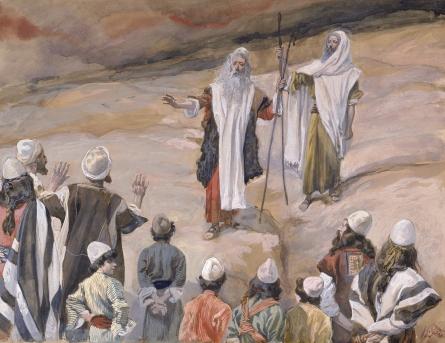
Christian artists paint pictures of God. Jews and Muslims don't. Is that because God is invisible? Is it because it's dangerous to look
at God? The Torah and the Hebrew Bible aren't always consistent on this question.
This week's Torah portion, Mishpatim (Exodus
21:1-24:18) is an outlier on this, telling of 74 Israelite elders who get a look at God and then sit down to lunch. What does Judaism say about God's physicality? I'll bring in texts from the Bible, Talmud, and Midrash, plus later writings on the subject. Please
bring your thoughts and questions for our weekly Zoom Bible class.
If you want a head start, here are links to the portion itself and to another web page that lets you explore dozens of commentaries on the weekly Torah reading.
Take a particular look at Exodus 24:9-11: "So Moses and Aaron; [Aaron’s sons] Nadav and Avihu; and
70 elders of Israel ascended, and they saw the God of Israel: Under God’s feet there was looked like a pavement of sapphire, as pure as the sky itself. And God didn’t raise a hand against the pillars [leaders] of the Israelites. So they saw God, and then ate and drank."
#########
The new approach to the class is a response to what a number of Nafshenu members have said: "We're interested in talking about basic aspects of Judaism in a way that doesn't assume we know a lot already."
The truth is that all of us have big
gaps in what we know about Jewish religion, history, philosophy, demographics. And sometimes, things we thought we knew turn out to be wrong (or only half true).
So I will kick off a series I'm calling "But You Were Afraid to Ask." Starting with a Bible text, we'll look at topics like life after death, where evil comes from, Jews and Jesus,
tattoos and burial, circumcision, the nature of God, who is a Jew, and kashrut. For now, we're sticking with Thursday nights. Let me know if there's a better day to do it.
Here's the link to this week's Zoom Bible study:
Best wishes to all -- Rabbi
David